American Express · 2024 · Enterprise SaaS
Self-Serve Platform
Corporate finance administrators needed access to transaction data for reports, audits, and reviews. Getting it meant emailing multiple teams and waiting days. We redesigned that process into a self-serve workflow.
Read the storyThis project sat within Global Commercial Services, the B2B division of a global financial services organisation. The users were personal assistants and finance administrators at enterprise client firms who managed corporate card transaction data across multiple markets. Their routine tasks included requesting reprints, reruns, and audit trails for reports, presentations, and financial reviews. Before this platform existed, every request started as an email.
Who the users were
Personal assistants and finance administrators managing corporate card programs across multiple markets.
What they were doing
Requesting data reprints, reruns, and audit trails for transaction files used in reports, presentations, and financial reviews.
What was missing
Direct access. Every request moved through an email chain, with no visibility into where it was or when it would arrive.
The work
The issue was not the data request itself, it was the dependency, silence, and delay around it.
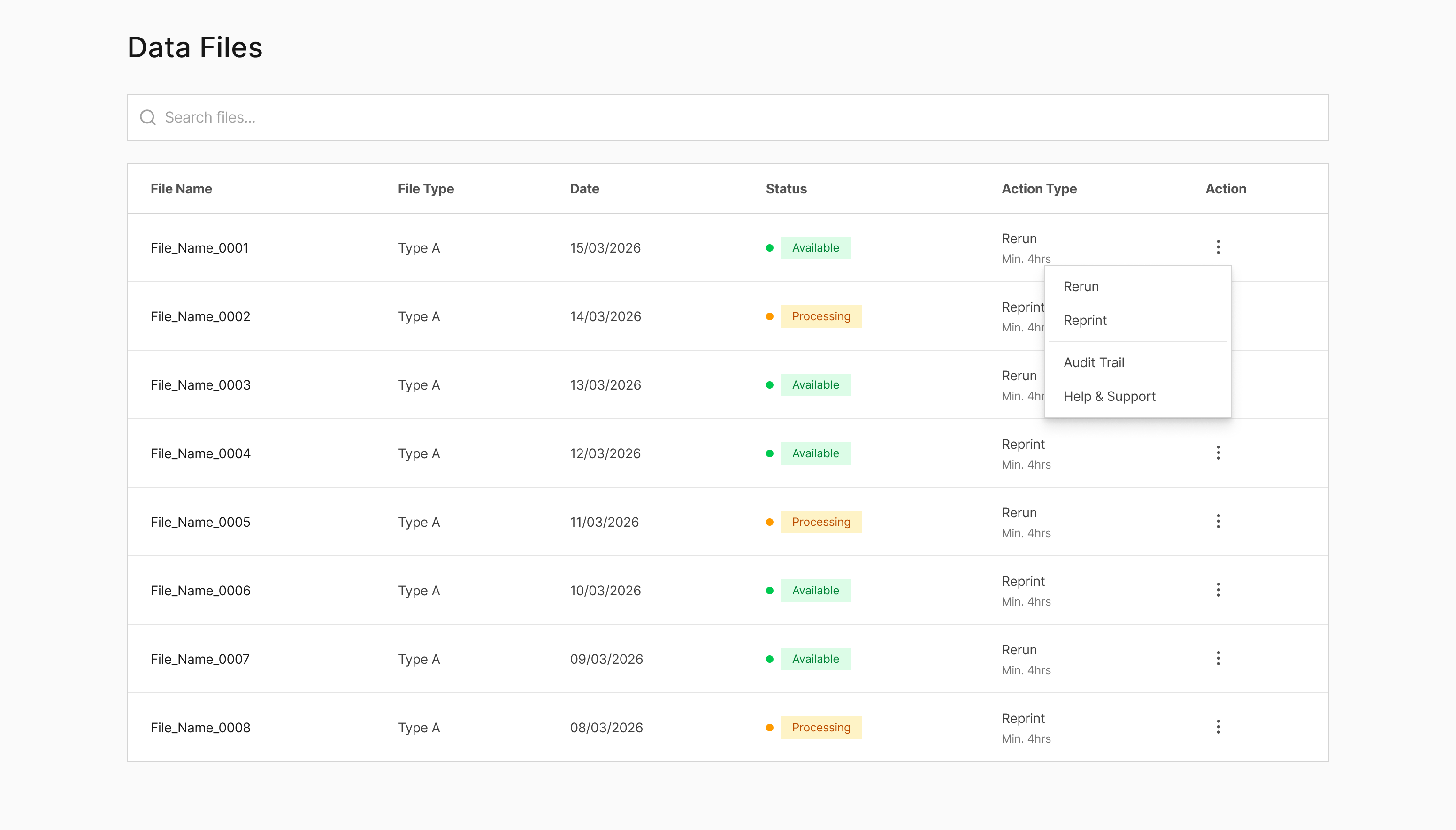
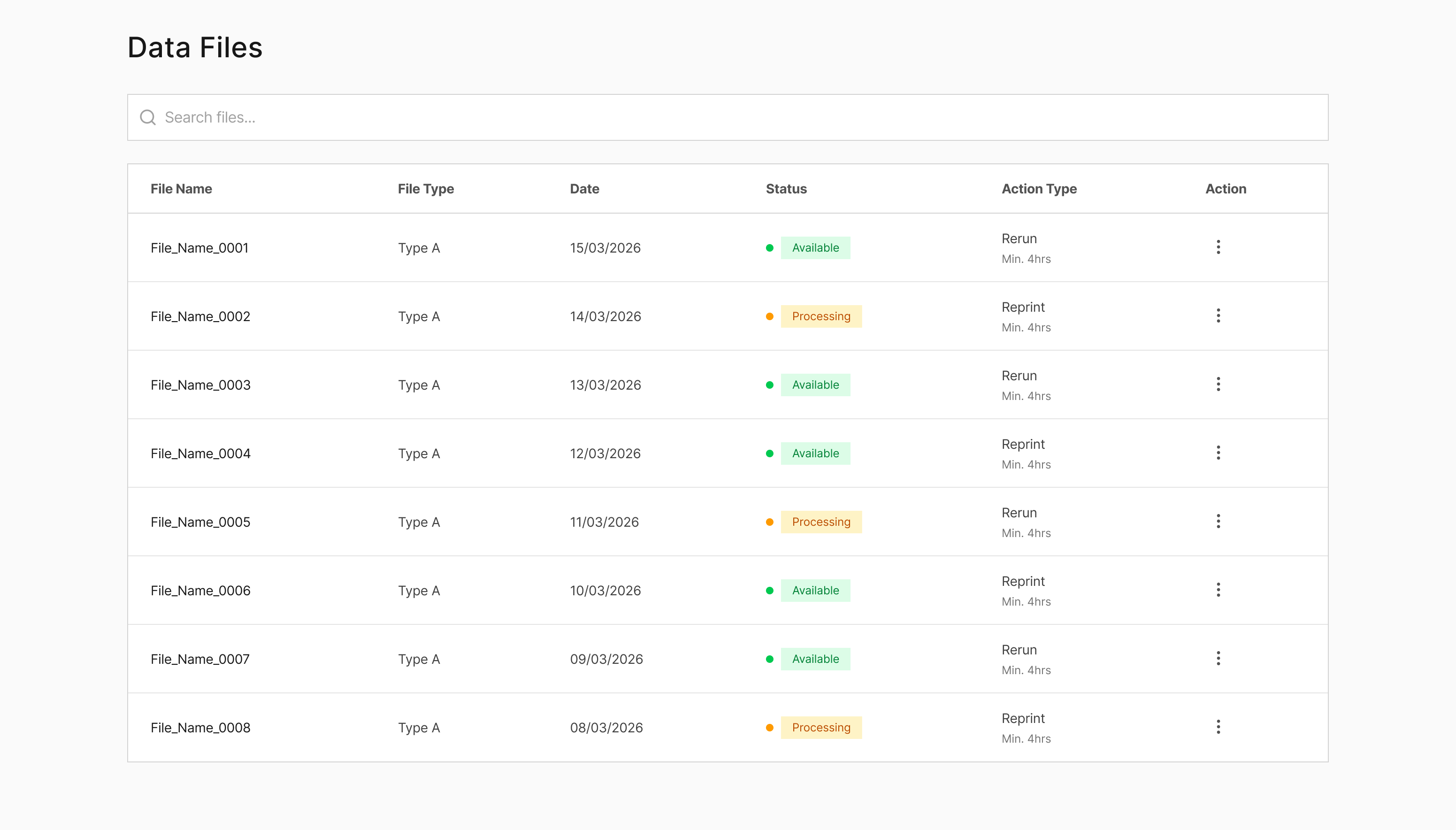
Embed the action where users already worked. Self-service lived inside the existing business platform — no new login, no separate tool, no email chain.
Make status passive and always visible. File availability surfaced at the point of access, so users did not need to ask another team for progress.
Reduce handoff dependency, not human collaboration.Routine requests moved into a repeatable self-serve flow, while people stayed focused on work that needed judgement.
Treat data access as a workflow input, not an outcome. Designing for on-demand retrieval removed data access from the critical path of downstream work.
What changed
Before
After
System design
To make self-service work at enterprise scale, three constraints had to be solved in the architecture — not just the interface.
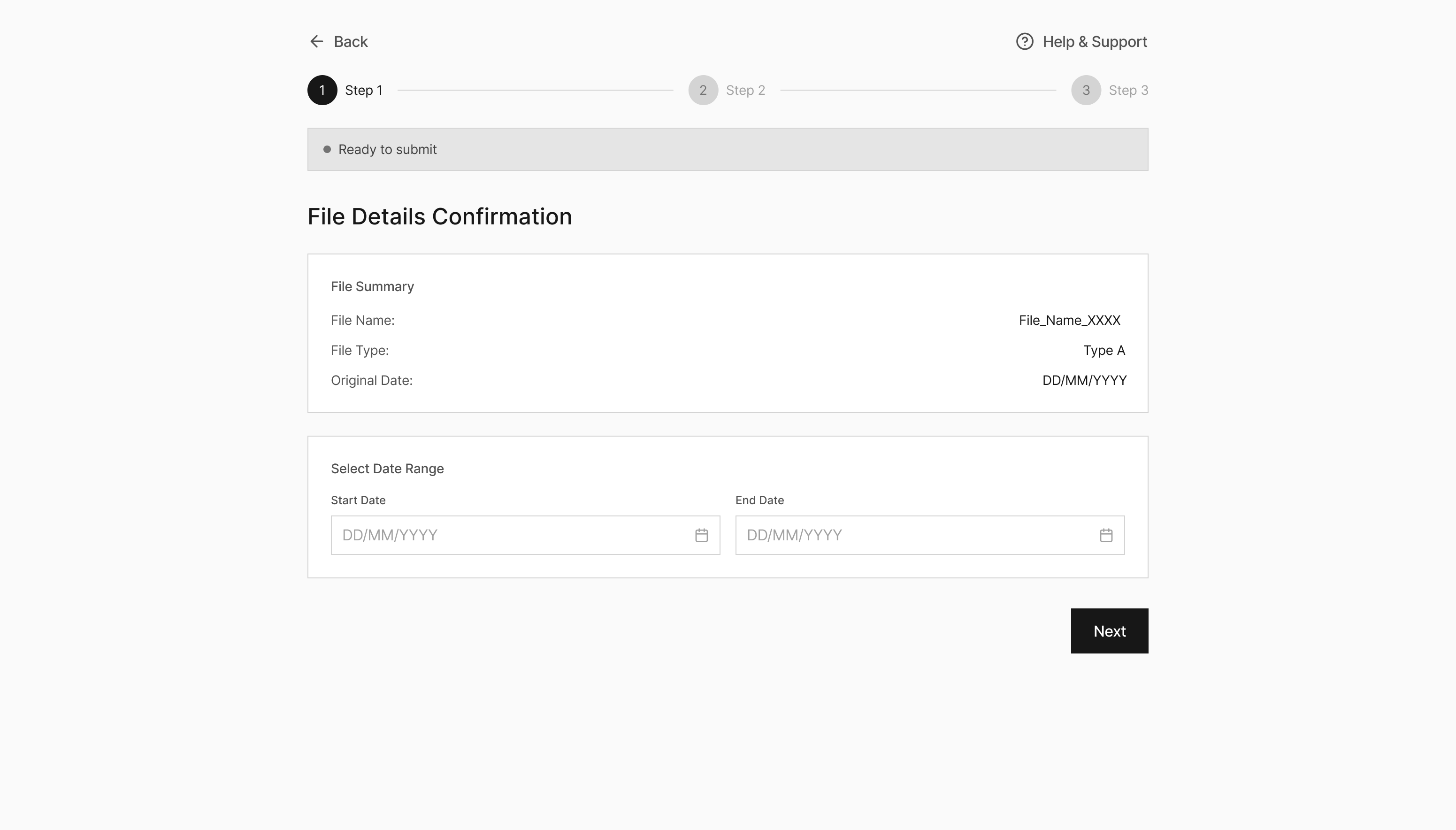
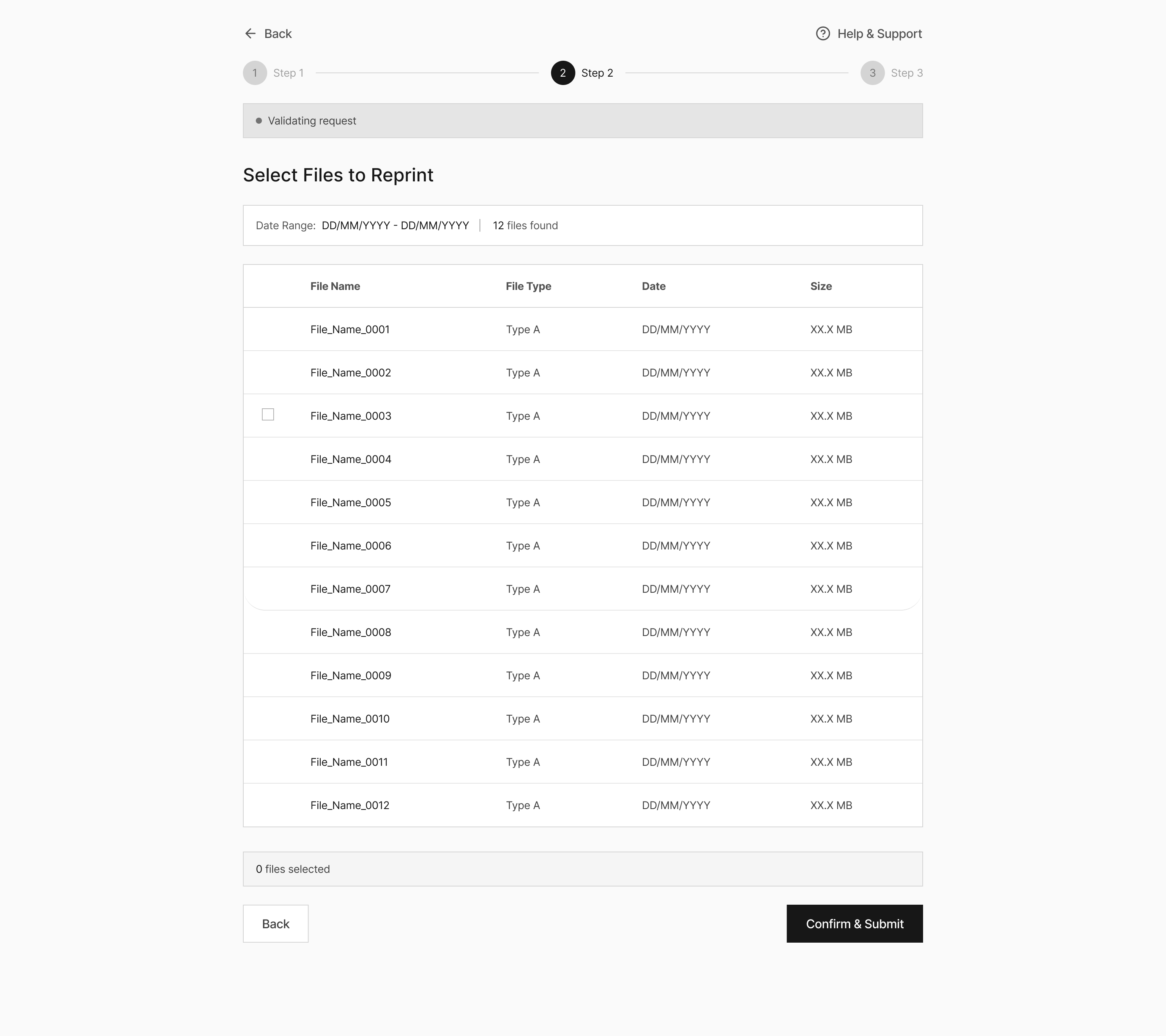
Users needed direct access to their firm's data files, but access still had to respect client, market, and permission boundaries. Being self-serve did not mean being unconstrained.
The platform needed to show users enough information to act confidently, without exposing data or actions they were not eligible to use. What you see is determined by who you are.
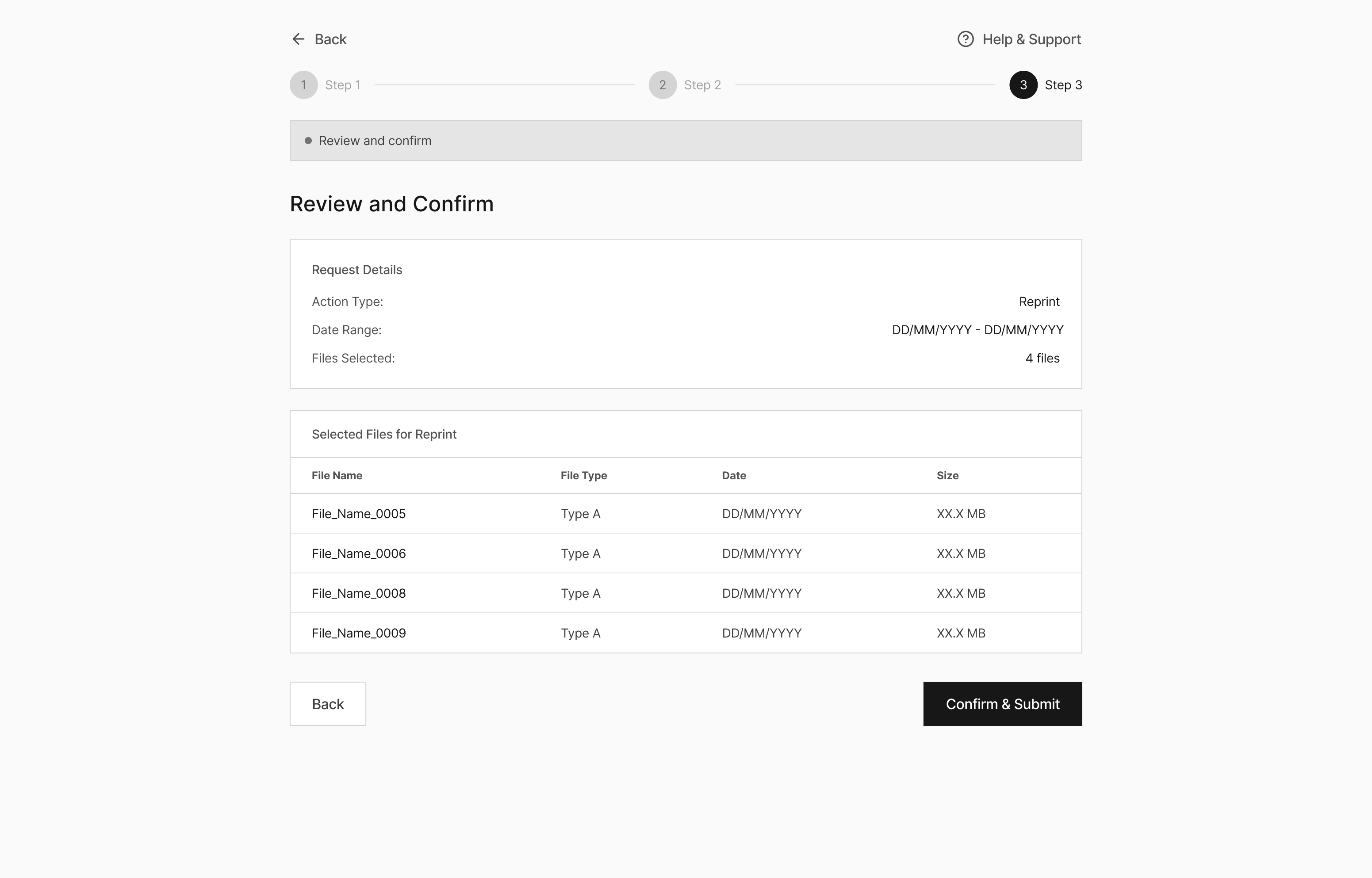
Requests like rerun, reprint, and audit trail needed to be traceable so the experience could remain self-serve without losing operational control. Autonomy required accountability.
Representative wireframes — production designs under NDA.
The result
A manual email chain became a self-serve workflow inside the platform.
Piloted with two firms, reviewed by compliance teams across multiple markets, and designed to expand one market at a time.
Reduction in request turnaround timeline
Task success rate during usability testing
Pilot firms in the first market release
Market-by-market rollout model
More work
Eliminated the 20-day receipt reconciliation lag for corporate cardholders.
Dual-sided system for consumers and the ops team — both sides of the platform, solved together.
Matched patterns users learned from Nykaa, Myntra and Amazon. Removed friction at the moment of purchase.